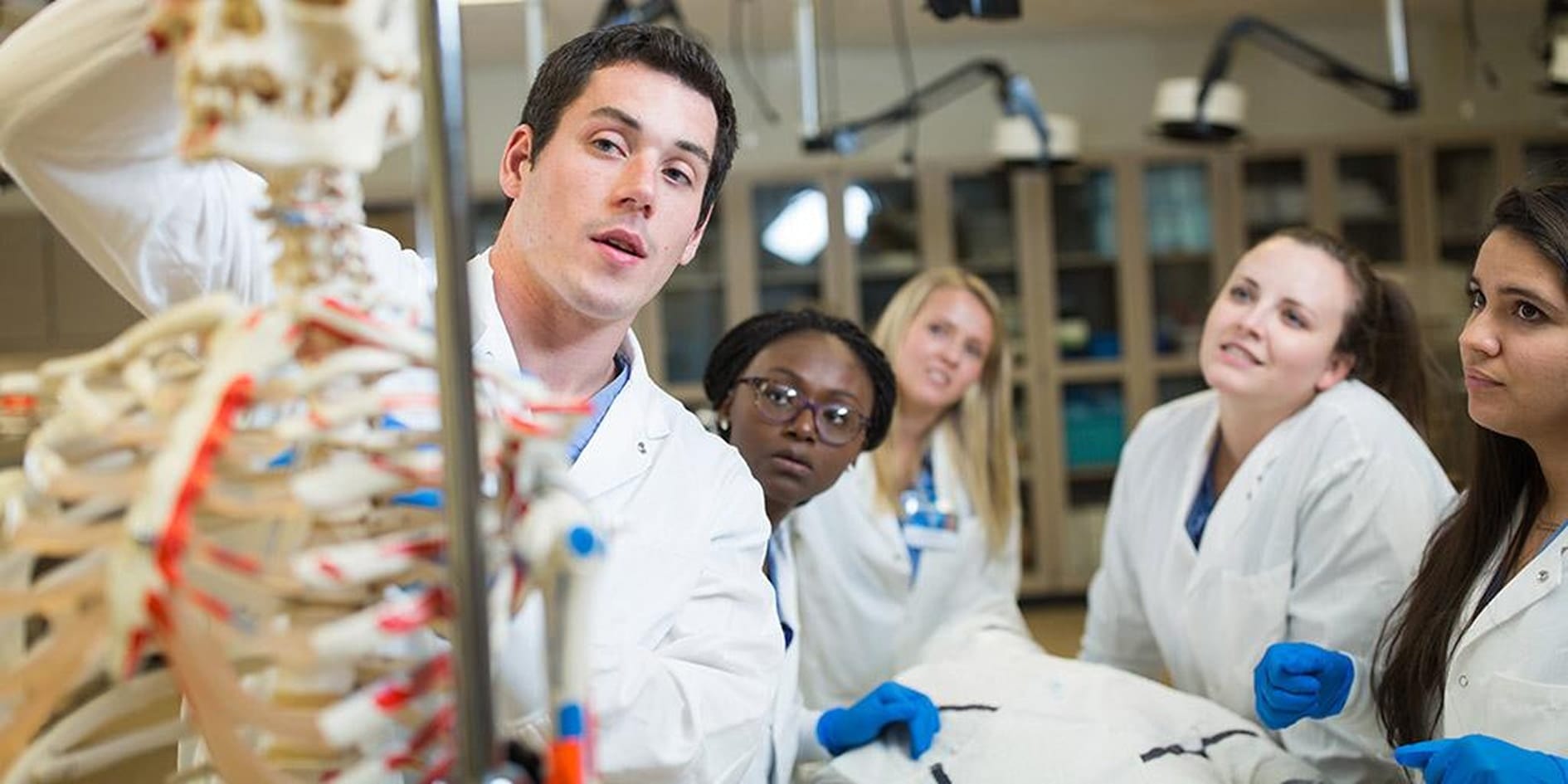
The 12-month Surgical First Assistant Program at Mayo Clinic in Rochester, Minnesota, offers the best-accredited certificate training program in the Midwest.
You will gain an advanced understanding of human anatomy while refining your surgical skills.
The 12-month Surgical First Assistant Program at Mayo Clinic in Rochester, Minnesota, offers the best-accredited certificate training program in the Midwest.
You will gain an advanced understanding of human anatomy while refining your surgical skills.
Not sure where to start?
Every journey into healthcare starts with questions. Whether you're exploring new possibilities or actively preparing to apply, this short guide can help you figure out what matters most and where to begin.
Student stories
Everyone starts somewhere. Here’s why they chose this path
Making a career change in healthcare takes courage and clarity. For many of our students, this program marked a new beginning. Some came from clinical roles, others from completely different fields. Some had taken time out to raise a family or were looking to reconnect with a sense of purpose. Each of them chose this path to build a meaningful future and to help others along the way.
Personalised Item One: Everyone starts somewhere. Here’s why they chose this path
Making a career change in healthcare takes courage and clarity. For many of our students, this program marked a new beginning. Some came from clinical roles, others from completely different fields. Some had taken time out to raise a family or were looking to reconnect with a sense of purpose. Each of them chose this path to build a meaningful future and to help others along the way.
Personalised Item Two: Everyone starts somewhere. Here’s why they chose this path
Making a career change in healthcare takes courage and clarity. For many of our students, this program marked a new beginning. Some came from clinical roles, others from completely different fields. Some had taken time out to raise a family or were looking to reconnect with a sense of purpose. Each of them chose this path to build a meaningful future and to help others along the way.
Personalised Item Three: Everyone starts somewhere. Here’s why they chose this path
Making a career change in healthcare takes courage and clarity. For many of our students, this program marked a new beginning. Some came from clinical roles, others from completely different fields. Some had taken time out to raise a family or were looking to reconnect with a sense of purpose. Each of them chose this path to build a meaningful future and to help others along the way.
Personalised Item Four: Everyone starts somewhere. Here’s why they chose this path
Making a career change in healthcare takes courage and clarity. For many of our students, this program marked a new beginning. Some came from clinical roles, others from completely different fields. Some had taken time out to raise a family or were looking to reconnect with a sense of purpose. Each of them chose this path to build a meaningful future and to help others along the way.
Personalised Item Five: Everyone starts somewhere. Here’s why they chose this path
Making a career change in healthcare takes courage and clarity. For many of our students, this program marked a new beginning. Some came from clinical roles, others from completely different fields. Some had taken time out to raise a family or were looking to reconnect with a sense of purpose. Each of them chose this path to build a meaningful future and to help others along the way.
Personalised Item Six: Everyone starts somewhere. Here’s why they chose this path
Making a career change in healthcare takes courage and clarity. For many of our students, this program marked a new beginning. Some came from clinical roles, others from completely different fields. Some had taken time out to raise a family or were looking to reconnect with a sense of purpose. Each of them chose this path to build a meaningful future and to help others along the way.
What made you switch from teaching to healthcare?
John, former teaching assistant
How did you know you were ready for the OR?
Maya, former CNA
What moment changed everything for you?
Jordan, biology grad
Gallery
Moments that stay with you
Finding your rhythm
Building confidence through repetition. Learning how to move, communicate, and work as part of a surgical team.
Learning from each other
Being in a room with people who care. Supporting one another and taking in every moment as it happens.
Inside the program
Get ready to learn by doing
This isn’t a program built on lectures and slides. From your very first weeks, you’ll be in lab environments that simulate real procedures. You’ll train with experienced professionals, then put your skills to work in the OR. This is a program for people who learn best by stepping up and getting involved.
Personalised Item One: Get ready to learn by doing
This isn’t a program built on lectures and slides. From your very first weeks, you’ll be in lab environments that simulate real procedures. You’ll train with experienced professionals, then put your skills to work in the OR. This is a program for people who learn best by stepping up and getting involved.
Personalised Item Two: Get ready to learn by doing
This isn’t a program built on lectures and slides. From your very first weeks, you’ll be in lab environments that simulate real procedures. You’ll train with experienced professionals, then put your skills to work in the OR. This is a program for people who learn best by stepping up and getting involved.
Personalised Item Three: Get ready to learn by doing
This isn’t a program built on lectures and slides. From your very first weeks, you’ll be in lab environments that simulate real procedures. You’ll train with experienced professionals, then put your skills to work in the OR. This is a program for people who learn best by stepping up and getting involved.
Personalised Item Four: Get ready to learn by doing
This isn’t a program built on lectures and slides. From your very first weeks, you’ll be in lab environments that simulate real procedures. You’ll train with experienced professionals, then put your skills to work in the OR. This is a program for people who learn best by stepping up and getting involved.
Personalised Item Five: Get ready to learn by doing
This isn’t a program built on lectures and slides. From your very first weeks, you’ll be in lab environments that simulate real procedures. You’ll train with experienced professionals, then put your skills to work in the OR. This is a program for people who learn best by stepping up and getting involved.
Personalised Item Six: Get ready to learn by doing
This isn’t a program built on lectures and slides. From your very first weeks, you’ll be in lab environments that simulate real procedures. You’ll train with experienced professionals, then put your skills to work in the OR. This is a program for people who learn best by stepping up and getting involved.
1150+
Hours of clinical experience
94%
Job placement rate
240+
Surgical cases completed
Faculty Stories
Who Who you’ll learn from
Our faculty aren’t just experts. They’re mentors. Each one brings a different perspective from the operating room and a shared commitment to helping students grow. They challenge, support, and prepare you for the moments that matter most.
This 12 month program builds the skills and confidence you need to assist in surgery. With expert faculty, immersive training, and access to world class facilities, you’ll be ready to step into the OR and make a difference from day one.
Personalised Item One: Skills that turn training into expertise
This 12 month program builds the skills and confidence you need to assist in surgery. With expert faculty, immersive training, and access to world class facilities, you’ll be ready to step into the OR and make a difference from day one.
Personalised Item Two: Skills that turn training into expertise
This 12 month program builds the skills and confidence you need to assist in surgery. With expert faculty, immersive training, and access to world class facilities, you’ll be ready to step into the OR and make a difference from day one.
Personalised Item Three: Skills that turn training into expertise
This 12 month program builds the skills and confidence you need to assist in surgery. With expert faculty, immersive training, and access to world class facilities, you’ll be ready to step into the OR and make a difference from day one.
Personalised Item Four: Skills that turn training into expertise
This 12 month program builds the skills and confidence you need to assist in surgery. With expert faculty, immersive training, and access to world class facilities, you’ll be ready to step into the OR and make a difference from day one.
Personalised Item Five: Skills that turn training into expertise
This 12 month program builds the skills and confidence you need to assist in surgery. With expert faculty, immersive training, and access to world class facilities, you’ll be ready to step into the OR and make a difference from day one.
Personalised Item Six: Skills that turn training into expertise
This 12 month program builds the skills and confidence you need to assist in surgery. With expert faculty, immersive training, and access to world class facilities, you’ll be ready to step into the OR and make a difference from day one.
You spend time in the Mayo Clinic Multidisciplinary Simulation Centers and human anatomy lab, as well as clinical time in the surgical suites of Mayo Clinic Hospital — Rochester and the same-day surgical suites in the Gonda Building.
Personalised Item One: Where you’ll train
You spend time in the Mayo Clinic Multidisciplinary Simulation Centers and human anatomy lab, as well as clinical time in the surgical suites of Mayo Clinic Hospital — Rochester and the same-day surgical suites in the Gonda Building.
Personalised Item Two: Where you’ll train
You spend time in the Mayo Clinic Multidisciplinary Simulation Centers and human anatomy lab, as well as clinical time in the surgical suites of Mayo Clinic Hospital — Rochester and the same-day surgical suites in the Gonda Building.
Personalised Item Three: Where you’ll train
You spend time in the Mayo Clinic Multidisciplinary Simulation Centers and human anatomy lab, as well as clinical time in the surgical suites of Mayo Clinic Hospital — Rochester and the same-day surgical suites in the Gonda Building.
Personalised Item Four: Where you’ll train
You spend time in the Mayo Clinic Multidisciplinary Simulation Centers and human anatomy lab, as well as clinical time in the surgical suites of Mayo Clinic Hospital — Rochester and the same-day surgical suites in the Gonda Building.
Personalised Item Five: Where you’ll train
You spend time in the Mayo Clinic Multidisciplinary Simulation Centers and human anatomy lab, as well as clinical time in the surgical suites of Mayo Clinic Hospital — Rochester and the same-day surgical suites in the Gonda Building.
Personalised Item Six: Where you’ll train
You spend time in the Mayo Clinic Multidisciplinary Simulation Centers and human anatomy lab, as well as clinical time in the surgical suites of Mayo Clinic Hospital — Rochester and the same-day surgical suites in the Gonda Building.
There’s no complicated portal or long essay. Just a few clear steps to get started, with support available at every stage.
Submit your application
There’s no complicated portal or long essay. Just a few clear steps to get started, with support available at every stage.
Send your supporting documents
There’s no complicated portal or long essay. Just a few clear steps to get started, with support available at every stage.
Hear back from us
There’s no complicated portal or long essay. Just a few clear steps to get started, with support available at every stage.
What to expect when you apply
FAQs
Questions we hear most often
Personalised Item One: Questions we hear most often
Personalised Item Two: Questions we hear most often
Personalised Item Three: Questions we hear most often
Personalised Item Four: Questions we hear most often
Personalised Item Five: Questions we hear most often
Personalised Item Six: Questions we hear most often
Can I apply if I’ve been out of school for a while?
Yes. Many applicants return to study after time away from education or clinical work. What matters most is your preparation and readiness for the program’s pace.
Do I need to know what kind of surgery I want to assist in?
No. The program gives you exposure to multiple surgical specialties. You’ll discover your strengths as you train.
Will I be working with real patients?
Yes. After initial simulation training, you’ll assist in real procedures under supervision during your clinical rotations.
What happens after I finish the program?
Graduates are prepared to sit for national certification exams and often secure jobs before completing the program. Many stay within Mayo, while others go on to roles across the country.
Personalised Item One: Will I be working with real patients?
Yes. After initial simulation training, you’ll assist in real procedures under supervision during your clinical rotations.
Personalised Item Two: What happens after I finish the program?
Graduates are prepared to sit for national certification exams and often secure jobs before completing the program. Many stay within Mayo, while others go on to roles across the country.
Personalised Item Three: Will I be working with real patients?
Yes. After initial simulation training, you’ll assist in real procedures under supervision during your clinical rotations.
Personalised Item Four: What happens after I finish the program?
Graduates are prepared to sit for national certification exams and often secure jobs before completing the program. Many stay within Mayo, while others go on to roles across the country.
Personalised Item Five: What happens after I finish the program?
Graduates are prepared to sit for national certification exams and often secure jobs before completing the program. Many stay within Mayo, while others go on to roles across the country.
Personalised Item Six: What happens after I finish the program?
Graduates are prepared to sit for national certification exams and often secure jobs before completing the program. Many stay within Mayo, while others go on to roles across the country.
Still deciding? Discover other programs that support surgical teams and patient outcomes. From surgical technology to anesthesia training, find the path that fits your interests and experience.
Transplant surgeon, Timucin Taner, M.D., Ph.D., and fellow, Omar Haque, M.D., M.P.H., share their experiences teaching and learning in Mayo Clinic School of Graduate Medical Education.
Every day at Mayo Clinic, mentors step up to this challenge — helping to inspire and empower the next generation of researchers. In this article series, Mayo Clinic mentees and their mentors testify to the power of mentorship.
Kristen Scheitler, M.D., a neurologic surgery resident and Ph.D. candidate, was recently awarded the Neurosurgeon-Scientist Training Program grant presented by the Society of Neurological Surgeons.
Before you apply to the Surgical First Assistant Program at Mayo Clinic, review the full list of prerequisite information, technical standards (non-academic criteria), and complete admission requirements.
We review the many attributes and qualities that make up an applicant and look forward to reviewing your application!
There are three ways to enter the SFA Program. You must either:
Have completed a bachelor's degree and met the admissions requirements.
Have an associate of applied science degree in surgical technology and have at least three years of full-time operating room experience (equivalent to 6,500 hours) in the last five years.
Be enrolled at an affiliated academic institution, University of Minnesota, Rochester (UMR). UMR has agreed to accept our training as a valid fourth-year completion of their bachelor's degrees (3+1 option).
Prerequisites
These prerequisite courses are required:
Anatomy and physiology with lab, human recommended (six credits)
General biology (three credits)
General chemistry with lab (three credits)
Microbiology (three credits)
Prerequisite courses need to be completed by Sept. 1 prior to the start of the program or have been within the past 10 years, receiving a grade of C or higher. A minimum cumulative GPA of 2.9 is required. A higher GPA is strongly recommended.
Competitive applicants
Students will be most competitive if they meet the following criteria:
Proficiency in medical terminology preferred. Experience may be gained through a college-level credited course or in a relevant healthcare setting, subject to program review.
Problem-solving skills. Having a self-directed learning approach to education.
Strong manual dexterity. The ability to use one's hands to skillfully manipulate objects and perform intricate tasks in a precise and accurate manner.
Teamwork. Being able to work in a team-based environment.
Healthcare experience. Direct patient care experience may be met by such roles as a phlebotomist, certified nursing assistant (CNA), emergency medical technician (EMT), personal care assistant (PCA) or any other patient care careers,
or volunteer roles.
Professionalism. Consistently exhibits behavior that reflects integrity, ethical conduct, and respect for others in professional settings.
Technical standards
Applicants must meet the technical standards (with or without reasonable accommodation) necessary to acquire or demonstrate competence in health professions as outlined in the Surgical First Assistant Program technical standards.
To seek exceptions to these standards or reasonable accommodations, students accepted for admission must initiate a request with the program director at least six weeks before the program begins.
Admission policies
Non-U.S. citizen applicants
Admission to Mayo Clinic School of Health Sciences is open to U.S. workers in the four categories below. Therefore, visa sponsorship is not available.
U.S. citizens
U.S. nationals
Lawful permanent residents
Asylees and refugees
Applicants whose primary language is not English must submit results from the Test of English as a Foreign Language Internet-based test (TOEFL iBT). Scores from the speaking portion of the exam are given particular consideration in admission decisions. Learn more about the exam and register online at the Educational Testing Service
.
The Mayo Clinic School of Health Sciences code for the TOEFL iBT is 5784.
Educational transcripts from schools outside the U.S. must be translated (if they are not already in English) and evaluated for U.S. equivalence by an accredited credential evaluation service company prior to submission. Please refer to the National Association of Credential Evaluation Services
for a list of qualified companies. The applicant pays for the examination and credential-evaluation services.
Application Process
Positions
The Surgical First Assistant Program admits 20 students every year on a competitive basis.
Applications are accepted beginning April 1 with a July 15 deadline for the program start date in January. Acceptance to the program is on a hybrid rolling admission and early applications are encouraged.
Complete each section of the application and submit
After submission, view the required Supplemental Items and Documents
Upload each required item in the Supplemental Items section
Complete the Recommendation Request section
Additional required items
Essay should be between 250-300 words, doubled spaced, and include the following. Upload it in the Supplemental Items section.
Why do you want to become a surgical assistant?
Provide contact information for two academic or professional references, including their name, email address, and their relationship to you (e.g., teacher, counselor, professor, employer, or supervisor).
Unofficial college transcripts may be uploaded in the Supplemental Items area for application purposes. If accepted to the program, all official transcripts will be required prior to the start of the program. Official transcripts must be sent directly from the institution by email to rstsfaadmissions@mayo.edu (preferred) or by mail to:
Tracy Auns Mayo Clinic School of Health Sciences Siebens Building, 7th floor 200 First St. SW Rochester, MN 55905
Deadlines
The application deadline is July 15, but is subject to change depending on how quickly the program slots are filled. The program uses a hybrid rolling admissions process.
Applicants are strongly encouraged to apply early in the admissions cycle to maximize their chances of being considered.
Interview process
The selection committee carefully reviews each application. Individuals considered for acceptance are interviewed on campus by the committee.
Our program has implemented a hybrid rolling admission process. This means that completed applications will be reviewed continuously throughout the application cycle, allowing for prompt decision-making. To maximize your chances of acceptance and to ensure timely processing of your application, we strongly encourage you to submit all required supplemental items as early as possible.
Acceptance
Acceptance letters are emailed approximately two weeks post-interview. Replies are expected within one week.
The 12-month Surgical First Assistant Program at Mayo Clinic in Rochester, Minnesota, offers the best-accredited certificate training program in the Midwest. You will gain an advanced understanding of human anatomy while refining your surgical skills. This program prepares you with the knowledge and skills needed to become an effective member of a surgical team with extensive knowledge of surgical procedures, all while learning the appropriate professional standards of the role.
Program highlights
A curriculum that includes five months of classroom and lab education and seven months of clinical experience, which allows you to start your career more quickly.
Training experiences at one of the largest surgical suites with one of the most advanced medical centers in the nation.
A focus on hands-on and tactical training where you’ll work on hundreds of cases that far exceed the accreditation board’s minimum hours of clinical experience.
An opportunity to sit for two nationally recognized certification exams, the Certified Surgical Assistant (CSA) exam with the National Commission for the Certification of Surgical Assistants (NCCSA) and the Certified Surgical First Assistant (CSFA) exam with the National Board for Surgical Technology and Surgical Assisting (NBSTSA). In 2023, the CSFA exam pass rate was 84%. Accreditation requires a minimum of 71%.
Upon successful completion of the program, graduates receive a certificate of completion from Mayo Clinic School of Health Sciences. The program requires a grade of 70 percent or greater to pass a course. All courses and clinical work must be completed consecutively; deviation from scheduled coursework is not permitted.
Surgical first assistant salary range at Mayo Clinic in Rochester
$78,936-$118,465/year
($37.95-$56.95/hour)
source: 2025 Mayo Clinic Pay Structure, subject to change
Accreditation information
The Surgical First Assistant Program is an accredited training program.
A surgical first assistant, also referred to as a surgical assistant or simply a first
assist, works in the operating room during a surgical procedure. They anticipate the needs
of the surgical team and during an operation, assist the surgeon with tasks such as
selecting equipment, holding open incisions, stopping bleeding, closing the incision, among
many other technical tasks.
They are advanced allied health practitioners who provide aid in exposure, wound closure,
bleeding control, and other intraoperative technical functions that help the surgeon carry
out a safe operation with optimal results for the surgical patient. The surgical assistant
performs these tasks under the direction and supervision of the surgeon and in accordance
with hospital policy and appropriate laws and regulations.
Scope of practice
Surgical first assistants interact with surgeons, anesthesiologists, nurses, and
other health care staff. They work very closely with patients of all ages. They have
responsibilities before, during, and after surgical procedures.
Common roles and responsibilities of a surgical first assistant include:
Communicating the surgeon’s preferences and specific patient needs to surgical team
Positioning the patient to provide the necessary exposure for the procedure, as well
as the surgeon preference
Providing intraoperative skills such as visualization, trocar insertion, injection
of local anesthetics, hemostasis, tissue handling, placement and securing of wound
drains, and closure of body planes
Having knowledge of and using all open, laparoscopic, and robotic equipment
necessary for a procedure
Proficiency in technical skills required during a surgical procedure, including, but
not limited to: clamping, cauterizing, suturing, inserting, injecting, manipulating,
retracting, cutting, and ligating tissue as necessary
Utilizing appropriate suturing techniques, according to surgeon preference, to close
the incision at the end of the procedure
Providing postoperative skills in patient care such as applying dressings to
surgical wounds, patient transfer and transport, transfer of care, and monitoring
for immediate complications
Collaborating with others to provide continuity of care
The list above is certainly not comprehensive as the role of a surgical first assistant
will vary greatly depending on the surgical procedure, specialty area, and type of
facility.
Surgical first assistant vs. surgical technologist
While similar, the surgical technologist and surgical first assistant are two distinct
roles. A surgical
technologist is responsible for surgical instrumentation, management of the
sterile field, and preparation of the operating room. A surgical first assistant is more
focused on assisting the surgeon during surgery. Depending on the facility, specific
duties may vary between surgical assistants, surgical technologists, and the surgical
nurse.
Specializations
This role is needed across virtually all types of specialty surgeries. Depending on the
institution or hospital, a surgical first assistant may help with a variety of specialty
areas including:
Cardiac
Cardiothoracic
General and colorectal surgery
Neurosurgery
Obstetrics and gynecology
Ophthalmology
Orthopedics
Oral and maxillofacial procedures
Plastic and reconstructive surgery
Transplant
Urology
Vascular
Work environment
Surgical first assistants most often work in hospital operating rooms, outpatient
centers, or specialty clinics.
Surgical first assistants work daytime or evening shifts and can be on call for overnight
or weekend periods on a rotating basis. This role requires you to be on your feet for
long periods during a shift.
Becoming a surgical first assistant
Many employers may look for surgical first assistants who can perform well under
pressure, work efficiently with attention to detail, and are open to continuously
learning about new surgical procedures and techniques.
Quality surgical assisting programs are identified by earning accreditation from the
Accreditation Review Council on Education in Surgical Technology and Surgical Assisting
(ARC/STSA), a collaborative effort including the Association of Surgical Assistants
(ASA), the American College of Surgeons (ACS), and Subcommittee on Accreditation for
Surgical Assisting (SASA), and by Commission on Accreditation of Allied Health Education
Programs (CAAHEP).
CAAHEP is a recognized accreditation agency of the Council for Higher Education
Accreditation (CHEA). In addition, surgical assisting programs are associated with
educational centers that are institutionally accredited by agencies recognized by the
United States Department of Education (USDE), The Joint Commission, or a state agency
acceptable to CAAHEP and the ARC/STSA.
Admissions requirements for specific surgical first assist training programs will vary.
After a high school education or equivalent, some common education requirements and
prerequisites include:
Associate degree in allied health field OR
Bachelor's degree in a health-related science
Specific coursework in human anatomy, basic sciences, or microbiology
Applications to the various educational programs can be competitive; enhance your resume
by:
Gaining experience in the health care setting with Certified Nursing Assistant
(CNA), Phlebotomy, Surgical Core Technician, Emergency Medical Technician (EMT), or
other allied health positions
Obtaining and maintaining CPR/BLS certification
Volunteering in hospitals, long-term facilities, or other healthcare settings
Joining in on team-focused activities, such as sports or collaborative organizations
The Bureau of Labor Statistics expects the employment of health technologists, including surgical first
assistants, to grow by over 9% by 2030. Advances in medical technology as well as a
growing patient population in need of surgical intervention will increase demand for
certified surgical first assistants nationwide.
From surgical technologist to surgical first assistant: Many surgical
first assistants start as surgical
technologist or surgical techs before advancing into the role of a surgical
first assistant. To become a surgical first assistant, a surgical technologist would
need to have several years of experience in the operating room, meet the prerequisites
and educational requirements to apply to and complete an accredited surgical first
assistant program, and then pass the exam to become a certified surgical first assistant
(CSFA).
From surgical first assistant to physician assistant or registered
nurse: The pathway from a surgical first assistant to a physician assistant
or registered nurse is not a direct path. To become a physician assistant or
registered nurse, a surgical first assistant would first need to ensure they meet the
educational requirements and prerequisites needed to attend a physician assistant
program or nursing program. After completing an advanced degree and training program,
they would need to obtain any necessary certifications needed to practice as a physician
assistant or registered
nurse.
From surgical first assistant to surgeon: To become a surgeon, a
surgical first assistant would need several years of advanced education and additional
training. However, their surgical experience will certainly help in their journey. A
surgical first assistant would first need to ensure they meet the educational
requirements and prerequisites needed to attend medical school. After attending medical
school, surgeons must complete several years of residency and possible fellowship before
being able to practice as a surgeon.
Surgical first assistant programs at Mayo Clinic
Mayo Clinic offers a one-year Surgical First Assistant Program in Rochester, Minnesota, to prepare students for a career as a Certified Surgical First Assistant (CSFA) and/or Certified Surgical Assistant (CSA). The Surgical First Assistant Bridge Program in Rochester, Minnesota, offers a flexible 9-month pathway for current CSTs to pursue SFA certification. Mayo Clinic also offers a one-year Surgical First Assistant Clinical Rotation in Rochester, Minnesota, for students at affiliated schools.
Surgical Rotation: Clinical III Surgical Specialty Concentrations
5
SFA 4800
Surgical Rotation: Clinical IV Clinical Observation/Grand Rounds
2
SFA 4900
Advanced Topics of Surgical First Assisting
3
Hands-on clinical rotations
The clinical rotations offered as part of the Surgical First Assistant Program require experience in a minimum of
-
200 cases (approximately 1,150 hours) and include these surgical areas:
General
Orthopedics
Neurosurgery
Trauma
Gynecology
Urology
Plastics
Ambulatory
Robotics
Vascular
Cardiothoracic
Clinical rotations will primarily be conducted at Mayo Clinic's campus in Rochester, Minnesota, with a few weeks
at
various Mayo Clinic Health System sites. These rural facilities are all located within 70 miles of
Rochester
and have on-site parking for incoming learners.
In order to take the National Commission for the Certification of Surgical Assistants (NCCSA) examination,
candidates
are required to complete a minimum of 140 cases. The program's clinical experience will exceed these
requirements.
Hours
The classroom portion of the program typically includes four or more hours per day, three to five days a week.
Days and times vary based on availability of faculty and space.
The clinical schedule can vary but you will never work above 50 hours a week. The minimum case requirement will
be discussed prior to entry of the surgical suite with the minimum hour requirement being 950 hours.
Outside work
You may hold outside employment if it does not conflict with your program responsibilities.
Facilities and faculty
Learn more about the facilities and faculty of the Surgical First Assistant Program.
Facilities
Mayo Clinic Hospital — Rochester is an extensive outpatient complex with substantial research and education
facilities. This Mayo Clinic site is among the largest, most advanced medical centers in the world.
You spend time in the Mayo Clinic
Multidisciplinary Simulation Centers and human anatomy lab, as well as clinical time in the
surgical suites of Mayo Clinic Hospital — Rochester and the same-day surgical suites in the Gonda Building.
Opportunities to rotate through Mayo Clinic Health System sites will be expected based on availability.
Mayo Clinic Hospital — Rochester has one of the largest surgical suites in the nation with more than 120
operating rooms. Each year, Mayo Clinic surgeons perform nearly 50,000 surgical procedures — about 200 a day —
at the hospital's two campuses. The vast number and type of surgeries, in combination with a highly educated
faculty, make Mayo Clinic an ideal educational setting for students in surgical training programs.
Teaching Faculty
Sarah Penkava, Program Director
Sarah Penkava started her nursing career in 1998 at Regions Hospital in St. Paul, Minnesota. Her first experience
at Mayo Clinic (2002) was in surgery, specifically with pediatric airways in ENT, ophthalmology, plastic
surgery, and oral surgery. Ms. Penkava went on to receive her Master’s in Nursing in 2009.
In 2012, the Mayo Clinic School of Health Sciences approved a new program to educate and train Surgical
Assistants. Sarah Penkava is the program director and has been with the Surgical First Assistant Program since
its inception. She is a Silver Quality Fellow (Mayo Clinic Quality Academy) and received her Instructor of
Nursing in 2014. Ms. Penkava is an active member of National Surgical Assistant Association (NSAA) , the
Association of PeriOperative Registered Nurses (AORN), and the Association of Surgical Education (ASE).
Tatum Schulz-Fischbach
Tatum Schulz-Fischbach officially joined the faculty in 2023. In 2018, Ms. Schulz-Fischbach graduated from the
University of Massachusetts with her B.S. in Biochemistry and Molecular Biology. After graduation, she completed
the SFA program at Mayo Clinic and was hired in the Department of Gynecology and Urology here. For the past five
years, Ms. Schulz-Fischbach has found a passion for teaching all aspects of surgery and sharing excitement for
the surgical assisting career. A couple of her favorite surgeries are robotic-assisted partial nephrectomy and
endometriosis procedures. Ms. Schulz-Fischbach continued her education and completed a Master of Arts in Health
and Human Services Administration in 2023.
Ms. Schulz-Fischbach is very active at Mayo Clinic with involvement in the HELP program, Coordinating Councils,
CSA II Advisory Council, and initiatives promoting patient safety and quality of care. She is an active member
of the National Surgical Assistant Association (NSAA).
Austin Tretter
Austin Tretter joined the faculty in 2024. Mr. Tretter graduated from the University of Minnesota Rochester in
2019 with his B.S. in Health Sciences. Following graduation, he completed the Surgical First Assistant (SFA)
program here at Mayo Clinic and was hired into our Trauma and Critical Care General Surgery (TCGS) team.
Mr. Tretter has since enhanced his surgical skills and has excelled in the SFA role in minimally invasive
surgery. He primarily works in bariatric and abdominal wall reconstruction surgery. His love for surgery stems
from his passion for anatomy and fascination with how the human body heals itself. Mr. Tretter’s enthusiasm for
working with students and fervor for the significance of the SFA role has only grown since his own time as a
student. It excites him to see others grow and master skills and become successful in the realm of surgery
Kat Zeller
Katherine Zeller joined the faculty in 2024. Ms. Zeller graduated with a masters of surgical assisting at Eastern
Virginia Medical School in 2019 with specialties in vascular and plastic surgery. She began her career at Mayo
Clinic soon after graduation and currently works on the urology and gynecology surgical services team at the
Methodist campus. During her tenure, she has also contributed as a surgical assistant recruiter and an advocate
for the surgical assistant role. Ms. Zeller is an active member of the National Surgical Assistant Association
(NSAA) and the unit coordinating council in the urology and gynecology department. She has a keen interest in
robotic surgical procedures and newer surgical advancements. With a longstanding passion for teaching and a
commitment to providing excellent patient care, Ms. Zeller is dedicated to advancing medical education and the
surgical practice.
Clinical Support Specialists:
Kam Naseer
Kam Naseer graduated with a Bachelor of Science in biology from Elmhurst University in Illinois. Following
graduation, he became a surgical technologist and worked in Chicago for 3 years at Loyola Hospital. Wanting to
do more, he enrolled in a surgical first assisting program in Michigan and upon graduation, he was hired at Mayo
Clinic in 2020 in ortho plastics, and later took a float position that included general, colorectal and
gynecology. After three years, he transferred to cardiac and vascular and has been there since. Mr. Naseer's
favorite surgeries include Coronary artery bypass graft, hemi and total arch replacements.
Ashley Obele
Ashley Obele earned her biology degree from Gustavus Adolphus College in 2014 and completed the Surgical First
Assistant program at Mayo School of Health Sciences. With nearly a decade of experience at Mayo Clinic, she now
serves as Robotic Coordinator for Methodist Hospital (since 2023) and holds an academic appointment as an
Instructor in Surgery (effective 2025). She's also a dedicated clinical instructor, leveraging her rich
background to advance robotic curriculum for surgical assistant students. An active member of the National
Surgical Assistant Association (NSAA), Ms. Obele previously co-chaired the Surgical Assistant Advisory Committee
and is recognized as a Bronze Quality Fellow at Mayo Clinic, demonstrating her commitment to healthcare
technology and robotic surgery advancements.
Grading and evaluation
Mayo Clinic School of Health Sciences uses these evaluative tools: written exams, demonstration of skills, self-assessment exercises, and faculty reviews.
Our system provides students and faculty with a complete look at individual performance. Because programs are small, faculty members are partners in learning with students and closely monitor their progress. Assistance is provided whenever necessary to keep all students on track with the program's learning goals and outcomes.
Graduation and certification
Upon successful completion of the program, graduates receive a certificate of completion from Mayo Clinic School of Health Sciences. The program requires a grade of 70 percent or greater to pass a course. All courses and clinical work must be completed consecutively; deviation from scheduled coursework is not permitted.
During the last course of the program, you are required to take national certification exams:
This program qualifies for the Mayo Clinic Education for Employment Agreement,offering tuition-free enrollment in exchange for a 24-month employment commitment after graduation.This agreement will be offered upon program enrollment and must be signed prior to the official program start date. Accepted students will receive communication directly from the Education for Employment team.
Estimated first-year student expenses (11.5 months) for the 2025-2026 calendar year of the
Surgical First Assistant Program:
Direct expenses (paid to Mayo Clinic)
Estimated direct expenses by semester
Items
Semesters 1-2 costs
Semesters 3-4 costs^
Semesters 1-4 total costs
Tuition
$10,278
$9,136
$19,414
Program fee
$500
$0
$500
Technology fee
$225
$0
$225
Total estimated cost for direct expenses
$11,003
$9,136
$20,139
Indirect expenses (not paid to Mayo Clinic)
Estimated indirect expenses by semester
Items
Semesters 1-2 costs
Semesters 3-4 costs^
Semesters 1-4 total costs
Books, course materials, supplies, and equipment
$285
$0
$285
Membership dues
$95
$0
$95
National Board of Surgical Technology and Surgical Assisting Exam
$0
$490
$490
Housing and food ($2,150/month)
$12,900
$11,825
$24,725
Home internet ($85/month, plus $75 one-time install fee)
$510
$468
$1,053
Personal and miscellaneous ($625/month)
$3,750
$3,438
$7,188
Transportation ($375/month)
$2,250
$2,063
$4,313
Federal student loan fee (average)
$78
$78
$156
Total estimated cost for indirect expenses
$19,868
$18,362^
$38,305
Total net cost of attendance
Modal Tuition Table
Description
Amount
Total estimated single student budget (direct + indirect expenses)
$58,444
^Note: Budget items and amounts are subject to change on or after July 1, 2025.
Budget information
Estimated budget information is provided to allow you to completely prepare for your education. The estimated budget is the estimated cost of education-related expenses.
Personal and miscellaneous expenses include clothing, laundry and cleaning, personal hygiene and grooming, recreation, renter's insurance, student health insurance, and disability insurance.
Transportation expenses include gas, oil, maintenance, and insurance.
Federal student loan fee is the average amount based on prior year borrowers and are a percentage of the total loan amount.
Dependent care and other expenses may be added to the budget on a case-by-case basis with supporting documentation. Contact Mayo Clinic's Financial Aid Office for further information.
Withdrawal and tuition refund
Students who find it necessary to withdraw from the program may be eligible to receive a refund of tuition depending upon the date of withdrawal. See the Mayo Clinic College of Medicine and Science withdrawal and tuition refund policy
.
Financial aid
Mayo Clinic School of Health Sciences offers financial incentives for students to participate in many of its health sciences training programs. Scholarships, grants, and low-interest loans may be available for those who demonstrate financial need.
/prod01/channel_2/media/mccms/content-assets/mega-menu/find-program-3675660_0001-menu.jpg)
/prod01/channel_2/media/mccms/content-assets/mega-menu/choosing-mayo-clinic-3660130-0025R-menu.jpg)
/prod01/channel_2/media/mccms/content-assets/mega-menu/mayo-clinic-arizona-3180811-0001-menu.jpg)
/prod01/channel_2/media/mccms/content-assets/mega-menu/mayo-clinic-florida-jax-davis-bldg-menu.jpg)
/prod01/channel_2/media/mccms/content-assets/mega-menu/mayo-clinic-minnesota-MEYR6203R-menu.jpg)
/prod01/channel_2/media/mccms/content-assets/mega-menu/mayo-clinic-health-system-3632732-0026-menu.jpg)





/128x0:896x512/prod01/channel_2/media/mccms/content-assets/about/news/2025-july-dec/1024X512_Transplant-Surgery-Surgeon-Fellow-WF3405965_0127.jpg)